
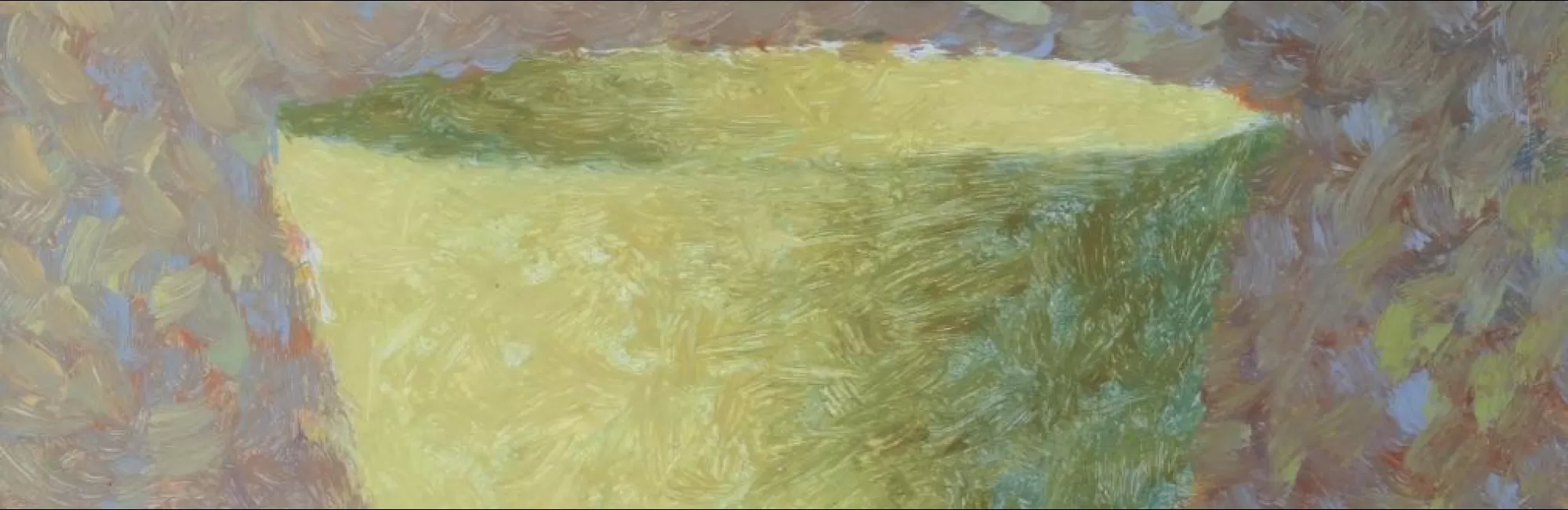
The Limited Palette: A Good Place to Start


In this 5-week course we explore two different ways of beginning an oil painting using two
different limited palettes:
1. The Primary Prismatic Palette: We mix a full range of colors using red, yellow, blue, and white. Avoiding the use of lines, we apply the paint as dots (or any gestural brushstroke that is not a line) to experience how paint itself creates the illusion of three-dimensions, light, and space.
Day 1 Primary Prismatic Palette: blue and white underpainting
Day 2 Primary Prismatic Palette: full color painting
2. The Earth Palette: Using classical techniques, we make a painting in three layers.
Day 1 Earth Palette: transparent monochromatic underpainting in earth red for establishing values from light to dark
Day 2 Earth Palette: earth colors plus white make the foundation for hues and warm/cool relationships
Day 3 Earth Palette: the full palette (combining earth and prismatic colors) using transparent glazing, translucent Velatura, opaque, and impasto paint applications
Required Supplies
- BRUSHES - A variety of brushes, including the following:
- bristle round size 2 A must for the first day of class.
- bristle filberts and/or bristle flats sizes 4, 6
- A must for day 3 of this class: Economy White Bristle Brush size 2-inch
- bristle round size 2 A must for the first day of class.
- SOLVENT - Solvent in a small jar for cleaning brushes and also for mixing painting mediums: odorless mineral spirits (Gamblin Gamsol).
- SOAP - plain white bar soap such as Ivory
- LINSEED OIL (refined)
- PALETTE (a rectangular shape works best) We will be mixing many gradations of colors so a bigger palette is better than a small one.
- disposable paper or wood or plexiglass or any other surface intended for oil paints
- recommended paper palette
- PALETTE/PAINTING KNIFE - For this class the best shape is: “Painting Knife - Small Long Spade 50”
- PAPER TOWELS
- NITRILE GLOVES
- PAPER AND PEN OR PENCIL FOR SMALL VALUE SKETCHES
- OIL PAINTS
- quinacridone red
- cadmium yellow medium
- ultramarine blue (note: not a phthalocyanine blue)
- earth red such as Old Holland red ochre or Williamsburg “Italian Rosso Veneto” (note not Venetian red unless it is Williamsburg
- Italian Rosso Veneto)
- yellow ochre (PY 43): Old Holland yellow ochre light is best
- ivory black
- titanium white or titanium zinc white
- quinacridone red
- PAINTING MEDIUMS - In a small glass jar or eyedropper bottle, mix odorless mineral spirits and refined linseed oil for each day as follows:
- Day one—2 parts odorless mineral spirits plus 1 part refined linseed oil
- Day two—refined linseed oil
- Day three—2 parts odorless mineral spirits plus 1 part refined linseed oil
- Day four—1 part odorless mineral spirits plus 1 part refined linseed oil
- Day five—refined linseed oil
- Day one—2 parts odorless mineral spirits plus 1 part refined linseed oil
You will also need a shallow dish or jar lid for small amounts of medium to use while painting
- A WHITE SURFACE, PRIMED FOR OIL PAINTS (Do not tone the surface with an Imprimatura) Not smaller than 9 x 12 inches. Here are a few options:
- stretched and primed canvas
- gessoed panel
- Fredrix canvas pad (these are not sold at Blick in Seattle, but they can be ordered online (This brand is superior to Blick canvas pads)
- gessoed mat board, museum board, or heavyweight hot pressed watercolor paper—Use a minimum of 3 coats of Golden white acrylic gesso. Change the direction of the brushstrokes for each layer.
Note: Painting in oils on an acrylic gesso priming is perfectly sound, as long as the gesso has had time to cure and is completely dry. Overnight is a sufficient amount of drying time.
Rebecca Dvorin Strong
Rebecca Dvorin Strong is known for meticulous artworks in which she painstakingly creates the illusion of light using multiple layers of color. Working in oils,...