
October 2026 Leadership Letter
Leadership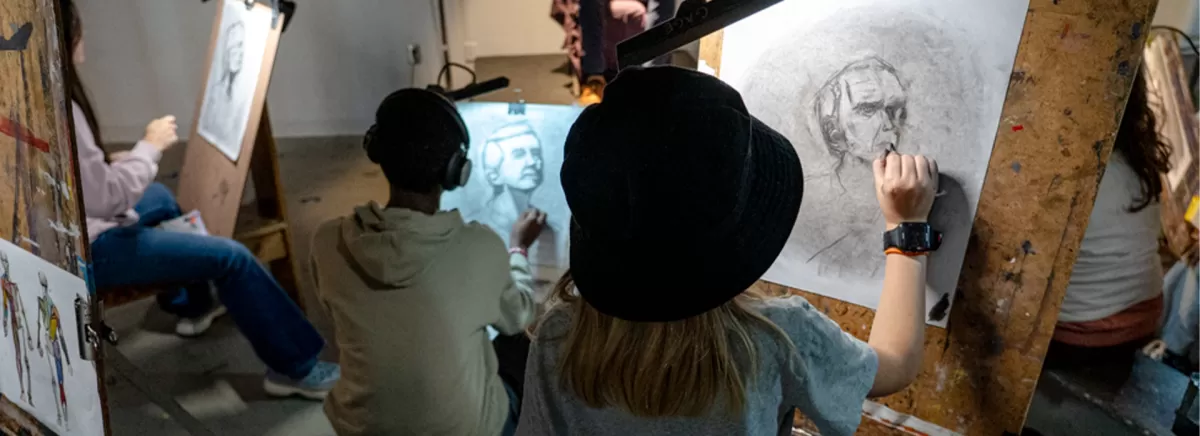
A Message from Kathleen Allen, Executive Director
Every artist begins somewhere.
My father was a doctor, but he rarely liked talking about his work at social gatherings. Inevitably, someone would begin describing a pain, symptom, or medical problem and ask for advice. The challenge was that my father cared for newborn babies. Unless the person seeking advice was less than a year old, he probably wasn't the right expert.
I have the opposite experience. I love to share about my work. When people ask what I do and I tell them that I lead an art school, the response is remarkably predictable: "But, I'm not an artist."
That response has led me to wonder why so many people feel they either are or are not artists. We don't tend to think this way about other pursuits. We understand that athletes develop through practice. Musicians improve through rehearsing. Doctors spend years learning their craft. Yet when it comes to art, many people assume that artistic ability is something you're either born with or without.
One of the things I love most about Gage is that our learners challenge that assumption every day. At Gage, we often talk about pathways. There are as many pathways into art as there are people who walk through our doors.
My own pathway began, in part, as a way to prove my father wrong. When I chose to study art history and education, he jokingly informed me that I had selected two of the most unemployable majors imaginable. More than twenty-five years later, I have built a career devoted to expanding access to the transformative power of arts education and helping people discover the value of creative practice in their lives.
Over the years, I have met many students who knew from an early age that art would be central to their lives. Some continued making art despite limited access to arts education. Others persevered without encouragement from family members or despite financial obstacles. They make art because they cannot imagine not making it. For them, it is as necessary as breathing.
Many of these students come to Gage seeking rigor, mastery, and deeper knowledge. Programs like the Atelier provide the disciplined training, mentorship, and community needed to refine their skills and advance their artistic practice. They find fellow learners who share their commitment to growth and excellence. But there is another group of learners at Gage whose stories are equally compelling.
These are the people who discover art later in life. Perhaps a friend invites them to a Drink & Draw event. Maybe they attend a Saturday Art Attack at Equinox Studios. Their curiosity is sparked. They begin to wonder whether they might be capable of making art themselves. Eventually, they decide to take a class.
That first step often requires courage. It means being willing to begin something new, to be vulnerable, and to accept that learning involves uncertainty.
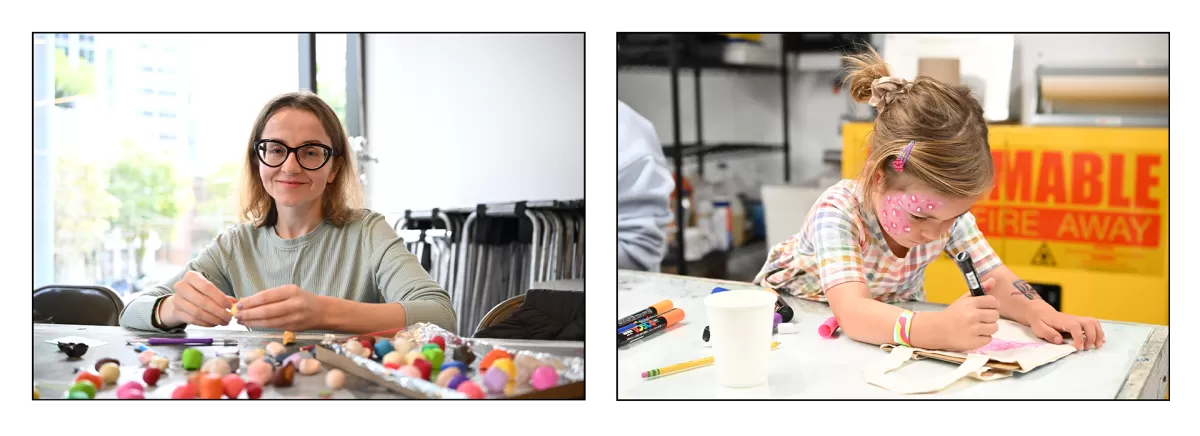
What I appreciate most about Gage is that it does not matter when someone starts. Our instructors welcome learners wherever they are in their journey. Whether someone has been drawing for twenty years or twenty minutes, they are treated with the same respect and seriousness. We understand that becoming an artist is not defined by a credential, a portfolio, or a particular level of skill. It is defined by a commitment to practice, to observation, and to continued learning.
In many ways, this learner-centered approach aligns with work we have recently begun around Universal Design for Learning, or UDL. Using a UDL framework, we design learning experiences that provide multiple ways for people to engage in art making, ensuring that all learners have equitable opportunities to succeed. We are very intentionally applying UDL as we launch our Youth Atelier this fall and as we develop partnerships in an underserved public schools. Through these programs, Gage youth educators are exploring how UDL principles can strengthen an already deeply student-focused educational experience.
What strikes me most about UDL is how naturally its principles align with what already happens in Gage classrooms every day. One UDL principle emphasizes purposeful and reflective learning. Students come to Gage with many different goals. Some aspire to professional artistic careers. Others seek creative fulfillment, stress relief, or a meaningful way to connect with others. Whatever brings them here, our instructors help learners pursue those goals with intention while encouraging them to reflect on their growth along the way.
Another UDL principle focuses on authentic learning experiences. In a Gage classroom, students engage directly with the world around them. They learn to see more carefully and observe more deeply. They study light, form, color, line, and space through direct experience. In an era increasingly shaped by screens and constant distraction, there is something profoundly grounding about spending time fully present with the act of drawing, painting, or sculpting.
A third UDL principle is being action-oriented. Learning happens through doing. At Gage, whether it is a student's first class or their hundredth, they quickly move from observation to action. Brush in hand, pencil on paper, they begin making. Our experienced instructors draw from a wide range of teaching strategies and adapt their approaches to individual learners. Small class sizes make this level of attention possible.
Ultimately, all of these ideas bring me back to that familiar response:
"But, I'm not an artist."
What I've learned from watching thousands of learners at Gage is that very few people arrive believing fully in their artistic potential. Growth comes through practice. Artistic identity develops over time. You may not see yourself as an artist today. But you can become one.
That possibility exists because Gage provides a place where people are welcomed at every stage of their journey. Someone pursuing rigorous professional training belongs here. Someone taking their very first art class belongs here. A young person discovering their creative voice belongs here.
There are few places in our region that make serious arts education available across such a wide spectrum of learners. As we look ahead, I invite you to help keep these pathways open. Your gift to Gage ensures that learners of all ages and backgrounds have access to exceptional arts education, dedicated instructors, and a community where they can continue to learn and grow.
Please consider making a gift today and helping the next person who says “But, I am not an artist” start to wonder, “Could I be an artist?” and discover that the answer is YES!

Kathleen Allen
Executive Director
Gage Academy of Art